
 EN
EN



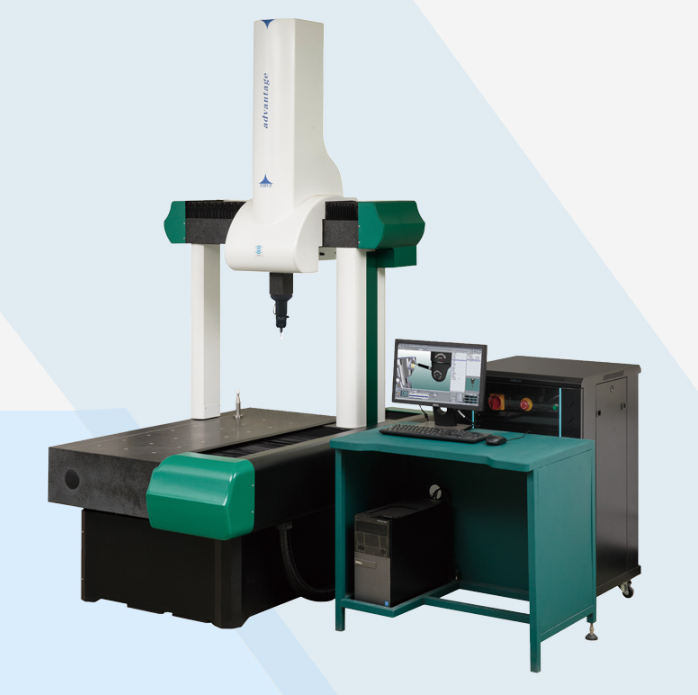
Your cmm measuring machine never stops works. Each day, she generates streams of data. Each day, she records dimensions, tolerances, and pass or fail results. Most shops, if not all, access these records to run the parts and assign a good or bad status. Most shops will even store these records to respond to future customer inquiries. While common, these practices yield huge amounts of unrecognized potential.
Your measurement devices capture data that can open your entire shop. Typically, data capture devices are only used to measure quality lock or pass. And though that is an essential and useful function, when measuring devices are used long enough, they begin to lock in potential and identify tendencies, close to drift, that are indicators of future quality issues. This is the goal continuous improvement.
Moving beyond the simple pass or fail
Measuring devices capture data at the simplest level to measure parts against upper and lower tolerance limits. A part is good if it is dimensionally and functionally within the defined limits. A part is bad if it is dimensionally and functionally outside the defined limits. This is the highest order, elementary function of these measurement devices. And while valuable, there is a tremendous amount of information captured within the tolerance limits.
Consider a part with a feature measuring very close to the upper tolerance limit. At the moment that part passes the inspection. However, if that feature continues to move upward each batch, it will eventually be out of specification. A CMM machine will pick up those little changes. With enough time and enough data recorded, you will see the trend before it becomes an issue. This allows you to make process changes earlier rather than being reactive and trying to troubleshoot a fix after a failure.
Locating the cause of variation
No manufacturing process is perfectly repeatable, and it can be said that there is always some variation. The key question is whether the variation is controlled? Your data from your measurements will provide the answer to that question.
As data is gathered from the CMM machine across multiple parts and multiple production runs, you will be better able to identify and differentiate various types of variation. Some of the variation may come from the wear of cutting tools, other variation may come from the shop temperature, still other variation may be from the different methods the operators use to set up the machine. The data will provide answers to the questions you have, and then you can determine the most appropriate things to do to reduce the variation.
Building confidence in the process
Building confidence in your process is one of the less obvious but perhaps more important benefits of using measurement data for improvement. Increasing the confidence in your process allows for the potential of reducing the frequency of inspections. When features are demonstrated to be stable and consistently within tolerance, opportunities to reduce the inspection frequency for features become available. This in turn opens up capacity for other downstream work, Machine and Operator Time, to be utilized for other work.
You do not want to reduce inspection frequency without data to justify the decision. However, when historical performance is stable, project quality inspection resources as a focus on the areas with less stable performance. This is continuous improvement. It is more than just improving the parts in the process; more importantly, it is about improving the inspection process.
Measuring tool performance
Measuring data tells you everything you know about tool performance; so, what can it tell you about tool lifecycle measurements? Tool change in the lifecycle of a tool based on a good guess or based on a pre-determined schedule is a guess on performance. Waiting for tool failure is not an intelligent or effective motor of data collection. However, allowing data to do the guiding will eliminate tool change guesswork. Measuring tool performance is an important tool in sophisticated manufacturing.
When a feature shows a trend towards drifting in one direction, a likely explanation is that a tool is wearing down. However, this does not have to be a surprise to you, your cmm measuring machine is going to be the first one to let you know. This allows you to plan a tool change before the parts go out of specification and avoid scrapping or reworking. The same goes for the fixtures. If you notice a specific variation that was caused by a specific fixture or configuration, the data will guide you towards this concern.
Along with continuous improvement, there must be a mindset of measuring the success, and with that, there must be a clear plan in order to measure the success of the change. If you change a cutting parameter, adjust a workholding method, or switch to a different tool, the first question you will have is whether that change was beneficial or not.
This is where the measurement data plays a crucial role. The CMM measuring machine will record the data before the change and will be recording the data after the change as well. ? If the variation is reduced or eliminated, that means the change was beneficial. If there is still a considerable variation, that means the change was not beneficial and you will need to try something else. All these work towards continuous improvement implement your improved and new tool, and have the confidence that you will measure the success of that change.
Building a culture of improvement
A change happens when operators and managers regard measurement data as an improvement tool instead of a pos or neg indicator. People tend to be more inquisitive. They ask questions. Why is this feature going up? What is different in the last batch? Is it possible to ease assembly by tightening this tolerance?
That is the fuel for improvement, and it all starts with consistent and easy to use data. When measurement data is poorly organized, people tend to ignore it. Once the data is user friendly, it becomes part of day to day conversation. Teams take the opportunity to solve the issue together.
Real world manufacturing has shown the existing value measurement data posses in real and apparent ways. One user stated that the time spent with a high precision video measuring machine was reduced by 40 percent. That is more than just a time saving, it results in better data collection in a short time, and a clearer understanding of the shop processes.
Another user remarked that the equipment, while performing tasks, was able to work on both small pieces and large workpieces and maintain a level of accuracy that was consistent. This versatility essentially translates to consistent and reliable data within a broad spectrum, thus, aiding the identification of trends that would otherwise go unnoticed when switching between workpieces of varying dimensions.
Data to Actions
Fifty percent of the job is data collection. The other fifty percent is the implementation of actions that derive value from that data collected. This is where a CMM measuring machine comes into play; it provides the necessary metrics. However, those numbers must be analyzed consistently. This translates to dedicating time to evaluate metrics/ numbers and trends rather than individual examination results.
Some workshops do this on a weekly basis. Others monthly. Whatever the case, the cycle is driven by the volume of your work and the pace of the change process. This is the essence of a repetitive cycle; measurement data is reviewed repetitively. When this is the case, the workshops create measurement data patterns that would otherwise be lost from the individual examination.
Conclusion
Your cmm measuring machine can be utilized as more than just a device for measuring components. It can be used to gain insight into your measurement processes. The data generated can be analyzed to identify where variation is occurring, when tool wear is present, and if your efforts for improvement have had any impact. Implementing a data driven approach to decision making shifts your focus from simply detecting issues to more proactive problem prevention.
This is the essence of continuous improvement. Less about working harder and more about working smarter and allowing data to guide your decisions. It all starts with the data that your measurement devices generate.