
 EN
EN



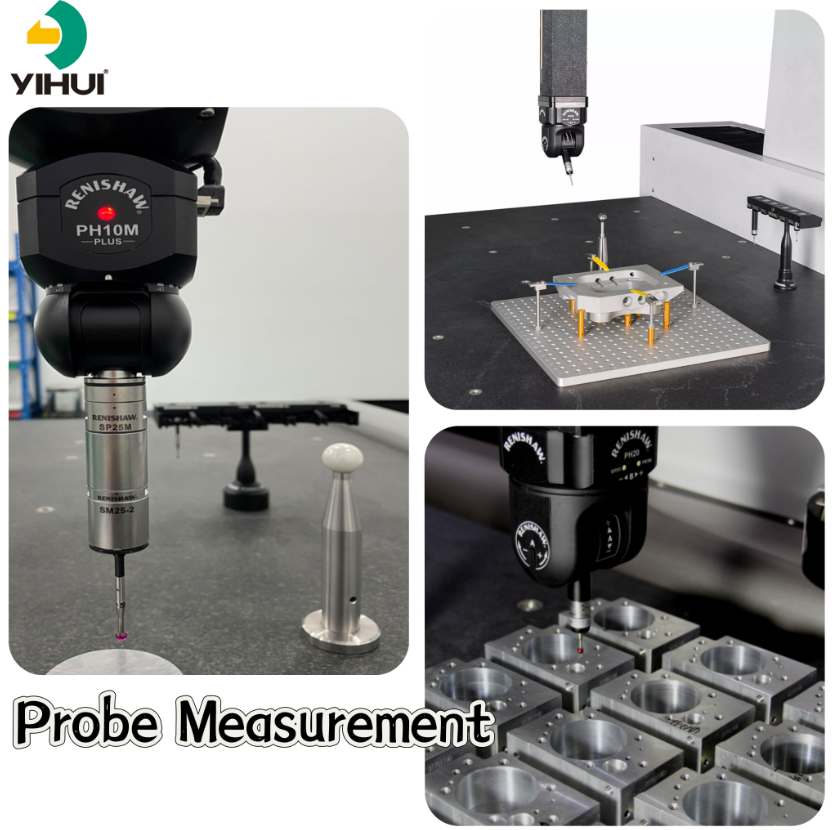
Talking about CMMs used to be tough. For a long time, people saw them as fragile, picky machines. You had to put them in a special clean room. You had to control the temperature. You had to keep them away from dirt and noise. And every time you needed to check a part, someone had to walk it all the way across the factory, wait in line, and then walk back. That is a lot of wasted time. A shop floor CMM machine has changed that story completely.
Reduce Employee Walks
Think about a normal production day. A part comes off the machine. Someone carries it to the inspection lab and puts it at the end of a line. There are usually ten other parts ahead of it. The lab CMM might be busy. The machine that made that part keeps running, but now you are taking a big risk because you do not know if the part is good or bad.
That back and forth kills your efficiency. One study showed that moving parts to a separate inspection location adds labor costs, wastes time, and even risks damaging the parts during transport. A shop floor CMM solves this problem. You put it right next to the machine tool. The operator takes the part off the machine, inspects it immediately, and gets an answer in minutes. No walking, no waiting, no guessing.
Speed Up Your Feedback Loop
Here is where a shop floor CMM really helps. When you inspect parts right at the machine, you get feedback almost instantly. If a feature is starting to drift out of tolerance, you know about it right away. You can adjust the tool offset or change the process before you make a whole batch of bad parts.
An aerospace parts manufacturer put a shop floor CMM next to their machining center and saw huge improvements. The CMM performed a complete inspection routine within the cycle time of the machine tool itself. That meant by the time the next part was ready, the previous one was already checked and confirmed good. Their scrap rate dropped dramatically, and they ended up buying more machines to meet growing demand. That is the kind of result that pays for the equipment fast.
Another manufacturer found that moving routine quality checks out of the QC lab freed up their quality people to focus on more valuable work, like first article inspections and process improvements, instead of grinding through the same simple checks over and over. Everyone benefits.
Designed for Real World Conditions
Now, you might be thinking, can a precision measuring device really survive on a dirty shop floor with vibrations, temperature swings, dust, and coolant in the air?
The answer is yes, but only if it is built for it. Traditional lab CMMs use air bearings, which are very precise but also very sensitive. A little bit of dust or oil can cause them to fail. Shop floor CMMs use robust mechanical bearings with sealed roller packs and covered guideways. They are designed to keep contaminants out. They also have active temperature compensation. Built in sensors constantly monitor the temperature and automatically correct the measurements so they are as accurate as if they were taken in a climate controlled lab. Some models even have anti vibration mounts to isolate them from the shaking of nearby machines.
Small Size, Big Capability
Another big advantage is the size. A traditional bridge CMM takes up a lot of space. You practically need a whole room for it. A shop floor CMM is much more compact. Some models take up less than one square meter of floor space. You can squeeze one into a corner next to a machine tool or between two pieces of equipment. In a busy shop where every square foot counts, that is a huge advantage.
And despite the small size, these machines are no slouches when it comes to capability. They can measure complex 3D geometries, not just simple 2D dimensions. A CMM measures parts as they actually exist in three dimensions, capturing multiple features quickly and reducing the number of setups you need. Some models offer measuring volumes large enough to handle bulky workpieces right where they are produced.
Catch Problems Early, Save Money
This is the bottom line. When you catch a problem early, it costs almost nothing to fix. When you catch it late, after you have made a hundred bad parts, it is a disaster. A shop floor CMM lets you catch problems at the source. You can inspect the first part off the machine, verify that everything is good, and then run the rest of the batch with confidence. If something does start to go wrong, you catch it after one or two bad parts instead of a hundred.
Manufacturers who have made the switch report faster inspection, quicker reporting, reduced lead times, increased output, and lower scrap rates. Those are not small improvements. They are game changers for your bottom line.
A Practical Tool for Real Shops
A shop floor CMM machine is not just a fancy piece of lab equipment dressed up in work clothes. It is a practical tool built for the real world. It saves time by eliminating the back and forth to the inspection lab. It speeds up feedback so you can fix problems before they multiply. It is built tough enough to survive on a dirty shop floor. It fits into tight spaces. And it catches problems early, which saves you real money.
YIHUI has been designing precision measurement equipment since 2003, and their CMM solutions are built with these principles in mind. Their machines combine single point probing and analog scanning, and they can be equipped with both contact and non contact probe systems. For manufacturers in machinery, electronics, aerospace, and automotive, a shop floor CMM machine is one of the smartest investments you can make. After all, the best way to catch a bad part is before it turns into a hundred bad parts.