
 EN
EN



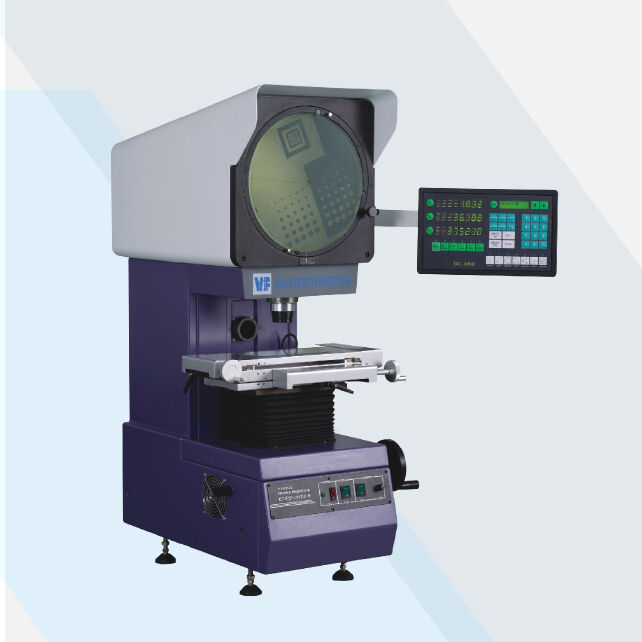
Start With What You Actually Need to Know
Walking into a quality lab or a metrology showroom can feel overwhelming. Rows of measuring instruments sit there, from simple handheld calipers to multisensor CNC systems that cost more than a house. The temptation is to chase the highest resolution or the flashiest software. But good selection starts with a much simpler question: what exactly do you need to find out? Are you checking the diameter of a shaft, the flatness of a sealing face, the contour of a lens, or the roughness left by a machining pass? The specific feature you are measuring points you toward one category of measuring instruments over another.
Accuracy Is Not Just a Number on a Brochure
Every instrument comes with a specification for accuracy or maximum permissible error. Those numbers are important, but they only tell part of the story. A micrometer might give you submicron resolution, but if your part is a large cast iron housing that changes size with temperature, that resolution is wasted. The real question is whether the instrument is capable under your actual conditions. The classic rule of thumb is that your measuring instruments should be able to resolve at least one tenth of the tolerance you are trying to hold. So if your part tolerance is plus or minus 0.1 millimeters, your instrument needs to reliably see 0.01 millimeters. Going tighter than that adds cost and slows things down without adding value.
The Shape of the Feature Decides the Tool
Think about what you are measuring. A simple external diameter might be handled perfectly by a digital caliper or an outside micrometer. A deep internal groove could call for a specialized bore gauge or a cmm with a star stylus. A freeform surface on a plastic injection molded part might only be measurable with a non contact scanner or a scanning probe. Matching the instrument geometry to the feature geometry is where a lot of selection mistakes happen. People sometimes try to force a square peg into a round hole, using a tool that can physically reach the feature but cannot produce a reliable result. Good measuring instruments are the ones whose physical access and measurement principle both fit the task.
How Many Pieces and How Fast
Volume changes everything. If you are in a prototyping lab checking one part per week, a manual tool that requires patient setup is perfectly fine. You can tweak, adjust, and take your time. If you are on a production line checking two hundred parts per shift, you need a solution that is repeatable and fast, preferably something with a fixture, a one button program, and a pass fail output that does not require an inspector to interpret a screen full of data. The same measuring instruments that delight a prototype machinist can drive a production manager crazy when the cycle time balloons. Matching the throughput to the instrument is just as critical as matching the accuracy.
What About the Operator
This gets overlooked more than it should. The most accurate instrument in the world is useless if the operator on the night shift cannot use it consistently. Complex software menus, delicate alignment procedures, or fiddly clamping all introduce variation. In many shops, the best measuring instruments are not necessarily the ones with the highest published precision but the ones that give the same result regardless of who is pressing the buttons. Gauge repeatability and reproducibility studies often reveal that simpler, more robust tools produce less measurement variation across multiple operators than highly sensitive laboratory grade equipment.
Software That Talks to Your World
One more thing to check before making a choice: where does the data go? A standalone instrument that displays a reading is fine if you just need a number. But if you are doing statistical process control, you need that reading to flow automatically into a database or an SPC software package. Digimatic output, Bluetooth, WiFi, USB, whatever interface your shop standardizes on, the measuring instruments you choose should support it seamlessly. Retyping numbers by hand wastes time and invites error. Making sure the data pipeline works from day one saves a lot of frustration down the road.
The Best Tool Is the One You Actually Use
After all the analysis, there is a human factor that cannot be ignored. An instrument that sits on a shelf gathering dust because it is too complicated, too slow, or too precious to let anyone touch is not doing your quality system any favors. The right choice in measuring instruments balances the technical specs with the reality of how things get done in your shop. It is the tool that gets picked up reliably, gives consistent readings, and makes the job of proving part quality straightforward rather than a daily battle.