
 EN
EN



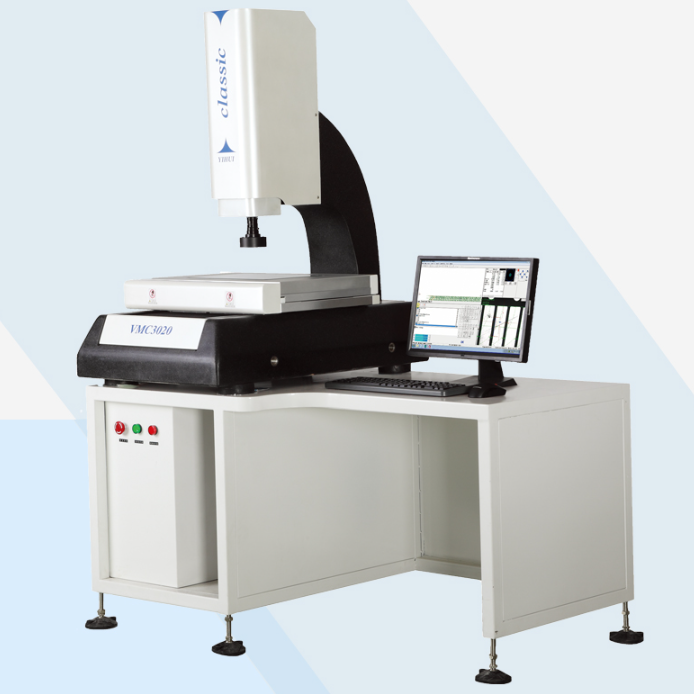
If you have engage with any type of optical measurement systems you would know how important a lens is in a measurement system. It is the systems eye, and like a human eye, if it does not properly see or measure something, the whole system is going to be inaccurate. This is exactly why choosing the right lenses in any video measurement system is very critical.
Among the range of lenses in the market, telecentric lenses are the best options when it comes to maximum accuracy and precision. They are not the best priced lenses, and not every video measurement system needs telecentric lenses, however, when it comes to video measurement systems where precise measurements is most important, for instance where the measurement targets have a lot of height variation or depth, telecentric lenses are the best. This essay is going to explain the reasons why telecentric lenses are best, and what advantages they offer.
What is special about a telecentric lens?
Before you understand the advantages of telecentric lenses, you need to understand what are the differences in the working principles of a telecentric lens when compared to a standard lens. Standard or regular lenses work just like our human eyes. Objects that are farther away look smaller or further away and those that are closer look bigger and closer. This is what we call perspective. This is no problem in photography however, for measurement this brings in an error and is not acceptable.A telecentric lens is constructed to remove that perspective distortion. It looks at objects at varying distance with the same zoom. So whether the feature you are measuring is sitting exactly at the focal plane or is slightly above or below it, the lens shows it at the same size. That is a game changer for measurement because it removes one of the biggest sources of variation in optical inspection.
Parallax is a big issue in measurement
A very annoying issue in optical measurement is parallax error. It occurs when the piece you are measuring has some thickness, or when it is not exactly flat on the stage. With a typical lens, if the part moves slightly up or down, it looks like the measurement has changed. The outlines seem to move. Your measurement becomes erratic.
Such problems can be solved using telecentric lenses. Telecentric lenses keep distance from the lens and object constant and result in consistent magnification. This means that measurements will be consistent, even if the component is not positioned perfectly. This is very beneficial in measuring machined parts that have steps, holes, and other complex geometries in three dimensions. You do not need to worry whether the component is positioned flush. The telecentric lens deals with that variation for you.
Precision and Measurement Repeatability in the Entire Field of View
The image created by standard lenses is not uniform and distorts around the edges. For example, the center of the image can have a flat object that appears uniform, but as you go to the corners, the object can appear to be of different shapes and sizes due to magnification changes. In the world of precision measurement, even the smallest distortion can be measured.
The telecentric lens technology is a technology of precision measurement. It is consistent in its performance from the center to the edges of the entire field of view unlike standard lenses. This means that measurements can be performed on any feature within the entire measurement field without fear of excessive positional error. This is particularly important when measuring components with multiple features in the entire measurement field.
Improved Handling of Depth and Height
In a video measurement system, features located at different heights often need to be measured. Consider a part with a raised boss, or a hole with a counterbore. The top surface and the bottom of the hole are at different depths. With a standard lens, capturing that depth is difficult as the lens’ depth-of-field is affected by the varying distance. This typically involves complicated calibrations or the addition of multiple sensors.
Telescopic lenses offer a solution to depth challenges because they offer constant magnification. With these lenses, varying heights become a non-issue. Whether a feature is higher or lower than its neighbours, the lens maintains its distance to each feature. This is what makes telescopic lenses valuable for the measurement of parts such as molds and dies with complex shapes.
Less Sensitivity to Variations in Illumination
Practitioners of optical measurement agree that light and illumination conditions are critical. Standard lenses are often drawn to the influence of variation in illumination. Measurement drift can occur with a changes in illumination source, or different reflections from the surface of the part being measured.
Telecentric lenses typically offer greater precision. Their design captures rays distributed more uniformly despite minute variations in the level of lighting. Ignoring proper lighting will affect the results, but much less so than with other measurements. For busy shops where lighting conditions vary with every measurement, telecentric lenses provide the precision needed for high productivity.
Measurable impact on reliability
All the aforementioned benefits cumulatively lead to a measurement system that functions reliably. Your time is not wasted on adjusting the positioning of the part. You do not stress about the necessity for the part to be perfectly flat. Consistent measurements are provided, even in the case of complicated geometrical configurations.
There are many more practical benefits associated with this level of reliability. It boosts the standard of the quality data. You provide the correct numbers in reports for clients and inspections. You control manufacturing processes with confidence in the data provided. It is the basis of effective quality control.
When to use a telecentric lens
Telecentric lenses are a great option for some applications, but they are not always necessary. If your application involves measuring simple, flat, two dimensional parts that fit flush against the stage, the lens won’t make much of a difference. If your applications involves measuring parts that are three dimensional with vertical features, then a telecentric lens will provide significant advantages.
Precision machining, automotive parts production, and mold making are good examples of industries that would benefit from the use of telecentric lenses. These are the industries that demand the most from video measuring systems, and those systems are designed to deliver results with a high level of accuracy.
Thinking about the whole system
A telecentric lens contributes to a larger system that involves rigid measuring principles. The telecentric lens should be integrated well with the camera, the software, and the hardware. For the telecentric lens to achieve its potential, the entire system has to be designed with measuring principles in mind, not just the lens itself.
A telecentric lens allows you to confidently measure different types of components, and helps reduce measurement uncertainty. Additionally, it allows your operators to concentrate on their tasks, rather than dealing with measurement inconsistencies.
Conclusion
A quality lens is essential for any serious dimensional inspection, and is not an afterthought. They offer specific advantages that make a significant difference to telecentric lenses. They eliminate parallax errors and maintain standard magnification throughout the field of view. They cope with variable depths and heights of components and provide stable results that are less affected by differing ambient light conditions.
All of these advantages correlate to a single principle; they increase the reliability of your video measuring system. When your measuring system is reliable, you can be certain that your quality is reliable. That is the bottom line.
Table of Contents
- What is special about a telecentric lens?
- Parallax is a big issue in measurement
- Precision and Measurement Repeatability in the Entire Field of View
- Improved Handling of Depth and Height
- Less Sensitivity to Variations in Illumination
- Measurable impact on reliability
- When to use a telecentric lens
- Thinking about the whole system
- Conclusion