
 EN
EN



More Than Just a Shadow on a Screen
A profile projector, sometimes called an optical comparator, is one of those instruments that has been around for generations. At first glance it seems simple. You put a part on the stage, a light shines through or onto it, and a magnified shadow or image appears on a big glass screen. But the real magic, and the real value in a modern system, lies not in the pretty picture but in how the instrument detects an edge. Without reliable edge detection, a profile projector is just an expensive lamp. With it, you have a precision measuring tool that holds its own against far newer technologies.
What Edge Detection Actually Means
Edge detection is the process by which the instrument determines exactly where the boundary of the part lies. In the old days, this was purely a human skill. The operator would look at the screen, squint a little, and move the crosshairs to where they thought the edge was, based on the transition from bright to dark. Two different operators could easily pick slightly different points. That uncertainty sits right inside your measurement budget, and you might not even know how big it is. Modern edge detection replaces that human judgment with an optical sensor that makes the decision consistently, every single time.
How Automatic Edge Detection Works
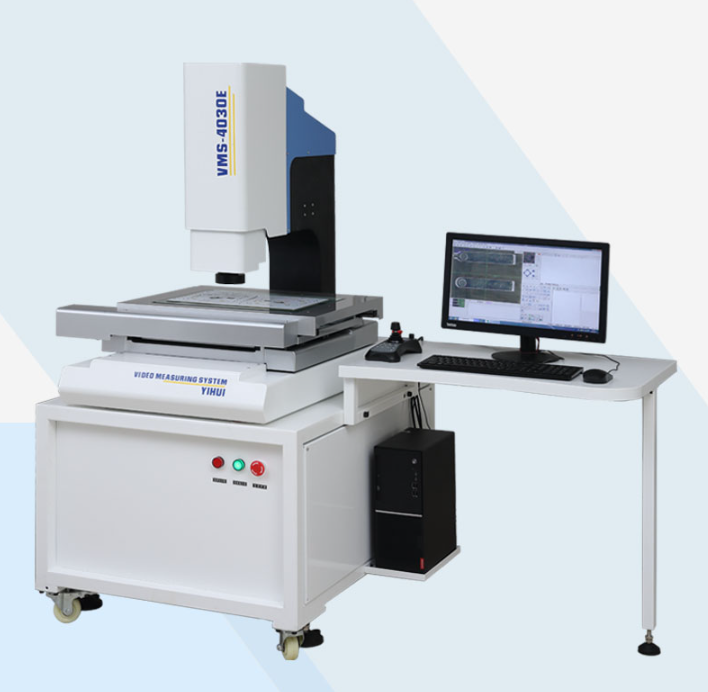
Today's profile projector systems use either a camera based image processing system or a dedicated optical sensor that scans across the edge. The system looks at the intensity profile of the pixels or the light signal. As the sensor moves from the brightly lit background into the dark silhouette of the part, there is a sharp gradient. The software analyzes this gradient curve and mathematically locks onto the true edge position, often at a specific percentage of the contrast transition. This happens in milliseconds and with subpixel accuracy. The operator simply initiates the measurement, and the machine finds the edge faster and more repeatably than any human eye ever could.
Reducing Operator Influence
This is where the real importance of edge detection comes in. In any quality system, operator dependent variation is the enemy of good process control. When you take the operator's judgment out of the edge picking process, you immediately eliminate one of the biggest sources of measurement variability in profile projector use. Two people on different shifts, or even the same person on a Monday morning versus a Friday afternoon, will get the same result. This improvement in gauge repeatability and reproducibility directly strengthens the decisions you make based on the measurement data. You are no longer comparing parts against an operator's interpretation of an edge. You are comparing them against a consistent, automated optical standard.
Speed and Throughput Gains
There is also a productivity story here. Manual edge alignment is slow. The operator hunts back and forth across the edge, tweaking the crosshairs, second guessing the setting. Multiply that by all the features on a complex turned part or a stamped profile, and inspection time balloons. Automatic edge detection tears through those same features in a fraction of the time. Once the part is fixtured and aligned, the software can run a full measurement routine, capturing radii, diameters, angles, and distances automatically while the operator does something else. In a busy shop, that speed alone often justifies upgrading an older manual profile projector.
Applications Where It Makes the Difference
Some measurements are nearly impossible to do reliably by manual sight alone. Think of low contrast edges on translucent plastic parts, rough surface edges on castings, or tiny features where the image on the screen is only a few millimeters across. Automatic edge detection can pull a clean edge out of a noisy or fuzzy image because it works on the intensity gradient, not on a crisp visual boundary. Medical device components, electronic connectors, and small turned parts for the automotive industry all benefit enormously from this capability. In these cases, the profile projector stops being a general purpose comparator and becomes a specialized inspection station for challenging parts.
What to Look For in a Modern System
If you are shopping for a profile projector with edge detection, a few things matter. Look at how the system handles different surface finishes and edge conditions. Can it correctly identify an edge on a matte black plastic part as well as on a shiny metal pin? Check the software interface. Is it intuitive, or do you need a degree in computer science to set up a measurement routine? Also pay attention to how the edge detection data integrates with other systems. Modern profile projectors can push measurement data straight into SPC software or a quality database, closing the loop and making the entire inspection process faster and more traceable.